Tuesday, March 24, 2015

Between the Lines


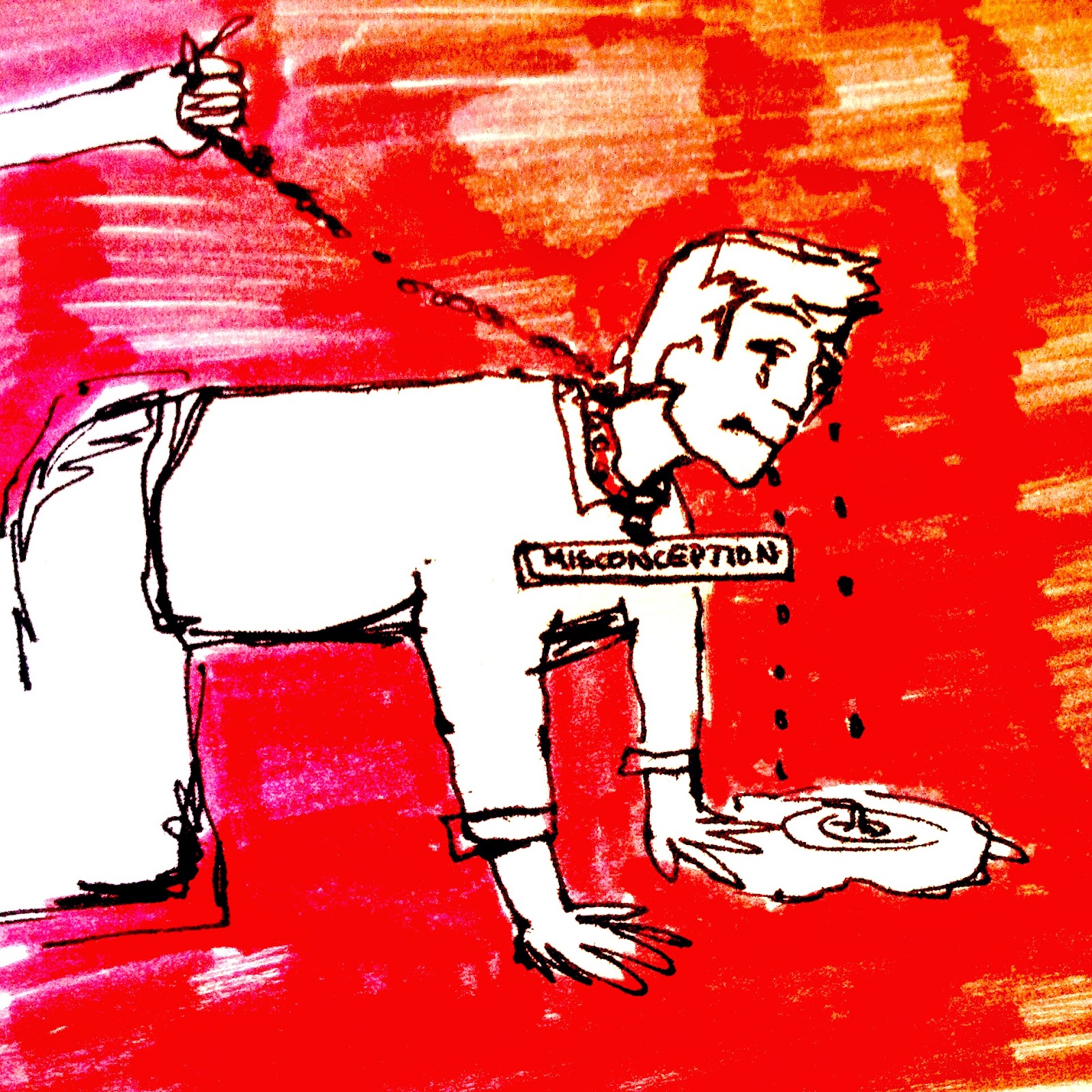
The use of genders in foreign languages has long prayed upon my mind. Studying French and Spanish I am reminded daily of the fact that the masculine dominates.

Let me explain.

If the subject of the verb is, for example a group of girls and boys, then, regardless of the ratio of boys to girls, the subsequent verb and/or adjective will always be in the masculine form.

For example, referring to a group of boys and girls:

English: 'They are beautiful'
French: 'Ils sont beaux'
Spanish: 'Son guapos'

Here the adjectives in both French and Spanish are in the masculine form, thus implying masculine supremacy, as the masculine overrides the feminine every time.

This is echoed in the English language too, although to a lesser extent. An example would be when one refers to a general person as male, for example saying that "each student does his own homework" instead of using the gender neutral 'their'. Furthermore we often say things such as 'Fireman,' and 'Mankind.' This implies that it is only the masculine that matters.

The main problem I have with this is the fact that it is so engrained in our society that even from a very young age girls are made to feel secondary through this subtle use of language. 

You may think that I am making something out of nothing, but in fact there was a study done which showed that depending on the gender of certain nouns, take 'bridge' for example, people would describe it in quite different ways. In Spanish the word bridge is masculine, and therefore when Spaniards were asked to describe a bridge, they used adjectives such as: "big," "dangerous," "long," "strong," "sturdy," and "towering." Conversely, the word for bridge in German is feminine, and when asked to describe the same bridge, the Germans used adjectives like: "beautiful," "elegant," "fragile," "peaceful," "pretty," and "slender." This was true despite the fact the tests were done in English, a language without grammatical gender. The stereotypically masculine and feminine descriptions of the same bridge can only lead us to the conclusion that the language must be affecting peoples perception of the bridge. Therefore it does seem that the use of gender in a language is significant. 

Perhaps in order to combat this inherent gender supremacy and the stereotypes it plays on we should think about using gender neutral forms in our own language, for example 'humankind' and 'firefighters.' I acknowledge that the problem is less easily solved abroad, but the adoption of a neuter, gender neutral, form could be beneficial if at all viable. 


Written by Lili


Picture Credit: Ellen


https://edge.org/conversation/how-does-our-language-shape-the-way-we-think

Sunday, March 22, 2015

Feminism vs. Misandry

I am about to make some obvious points that have been made many times before. I don't believe we should stop saying the obvious points until the message gets through.

1. Feminism does not equate to misandry (misandry=the hatred of men), misandry is very wrong in the same way that misogyny is very wrong. Among misandrists who call themselves feminists, many have views that may overlap with feminism (e.g. that we should eradicate the pay gap) but cannot  be called feminists as the idea of hating men directly contradicts the basic principles of feminsim.

2. Feminism is not a movement which aims to promote women above men

3. Feminism promotes gender equality

4. Feminism is beneficial to men also, in a large number of ways but focuses on the plight of women as they are in an undeniably disadvantaged position in society. This disadvantage varies in intensity from country to country and has been reduced through activism in many places but is present in all modern societies today.

5. Feminism ought to be intersectional, that is consider other factors that affect privilege such as class, race and sexuality.

6. Common responses to Feminist arguments such as "not all men" and "men get raped too" are completely missing the point. They are, of course, perfectly valid and true statements, but they do not go against feminist ideology so cannot be used to argue against it.

6. (Controversial): Feminism needs to be called feminism. Whilst terms such as egalitarianism are of course important and inclusive, we need terms to address the issues of specific groups that are at a disadvantage to another, more privileged, group. The same argument applies to, for example, the term 'black feminism', it could be argued that this comes under the term 'feminism' and is therefore unnecessary or exclusive, but 'black feminism' is important because it highlights how black women are generally subject to further discrimination than caucasian/white women.

We all need to understand that feminism does not exist to attack anyone. The criticisms are directed at society and the way it is biased in favour of certain groups, not at the groups themselves. The criticism can be directed towards individuals who promote certain privileges, such as politicians who endorse laws that discriminate against women but not at men in general. Men need to be aware of the privilege that they have and support the cause for gender equality but also know that feminists are not trying to brand them all with the same brush nor try to claim that they are individually responsible for gender inequality.

Written by Ellen

Picture Credit: Ellen

P.S. can we drop the 'battle of the sexes' idea, we are all team human, the only battle is against inequality


Friday, March 20, 2015

M ssing Characters

 Before I start watching a new TV show one of the first things I find out is whether it has a gay man in it. Some people might find it weird, surely it doesn’t matter whether there's a gay dude in it! But it does matter. It's important. So important.

I'm not saying that I don't enjoy TV shows that don't have gay men in them. The majority of TV shows I watch do not have gay men in them, but the ones that do are so much more important to me. As a child all of my friends were female because I found it very difficult to relate to boys. As I grew up and explored different media, I felt a disconnection between myself and the male role models every other boy wanted to be. I didn't want to be Luke Skywalker or David Beckham, I didn't care about them, they weren't like me.

It is hard to communicate the necessity of representation to someone for whom it is not a problem. When I look back on my childhood I am filled with great sadness. It took me a long time to come out and I cannot help but feel that if I'd had gay role models I would have come to terms with my identity far sooner and saved myself so much angst and confusion. As children the books we read and movies we watch guide us through adolescence. As boys we are meant to aspire to be these fantastical characters who's heroic exploits conquer evil in the name of good. We are told we should be heroes like Harry Potter, Indiana Jones, James Bond, we're told we should kill the baddies and get the girl. But what if I don't want the girl.

We call it a heteronormative society. It's normal to be straight, and that's just the way of life. So growing up I had no idea of anything other than that. I wasn't weird, I was normal. I didn't even know gay was anything more than an insult thrown about the playground until I was 10 years old.  As I struggled to grasp hold of my identity I became more isolated. I had been told I was going to marry a pretty girl and have lots of children, that's what men did, that's what heroes did, that's what my dad and my teachers had done, and that's what the other boys were going to do. There was no notion of marrying a boy, that was weird, that was gay. I'd met perhaps three gay men and shied away from all of them, fearing that I might be like them. In my head it was like I had a disease. The adults didn’t talk about it, the children were scared of it, I didn’t know what it was or what it meant. It went against everything I had been taught, but I knew I had it. So I walked around with it, in constant fear someone would expose me, wishing I would stop being ill.

No one had ever said it was okay.

If I had known it was okay, known I could marry a boy, known I wasn’t weird, known I could still be a hero, still kill the baddies and still fall in love, then I would have never felt so awful. If I'd had a role model who I could connect with, a role model who was like me and could have shown me I was perfect just they way I was then I never would have felt so isolated. I remember the first gay couple I ever saw on TV; Tara and Willow from Buffy The Vampire Slayer; and how much I cried when they got together. It filled me with the hope that one day I would find someone too.

It may be 2015 but not that much has changed. Millions of children are growing up scared and isolated because they don't understand themselves. In schools we get 'the sex talk' but where’s the sexuality talk? Where are the parents who sit their kids down and say 'its okay if you're a different gender'? Nobody tells these children that its okay.

That is why we need LGBT+ characters. If you're straight and cis-gender you know who you are, you know where you stand in the world, and you have role models to aspire to. But many LGBT+ individuals don’t have this security, we go through such extraordinary experiences and often don't have anyone who understands or even accepts who we are. Given the failings of many parents, the education system and society as a whole, we must look to popular media for support. The LGBT+ youth need role models, characters to empathise with; people who go through what we experience and empower us to keep fighting so we can get a happy ending too. Showcasing LGBT+ characters is not only beneficial to LGBT+ youth. LGBT+ individuals of all ages will be given further strength and hope by being able to relate to issues they’re experiencing through characters they love. The wider coverage of LGBT+ issues will also allow parents across the world to understand and support their children, and promote global acceptance and equality.


I don't want any child to feel the way I did. I don't want my children to live in a world of pain, isolation and ignorance. But I do hope that other LGBT+ individuals will be able to relate to my experience and that my pleas for representation extend out to anyone who has been oppressed or discriminated against.


That is why I find out whether a show has a gay man in it. I know I will be able to relate to him, I know he will support other gay men, and I know he will be a beacon of hope for us all.


Written by Jub

Picture credit: Ellen


Recommended TV shows with prominent LGBT+ characters:
Buffy The Vampire Slayer, Greys Anatomy, Modern Family, Happy Endings, Glee, Orange Is The New Black, Ugly Betty, The Fosters, The New Normal, Skins, The L Word, Looking, Queer As
Folk, Banana,

Wednesday, March 18, 2015

The Education Solution

Once again, it would appear that the Scandinavian countries have got it right. Students in Finland repeatedly out perform those in Britain. In fact, they have done best in worldwide tests in core subjects, "Finland's pupils scored the highest average results in science and reading in the whole of the developed world" (BBC News) despite only starting school at the age of 7.

Due the poor natural resources in Finland, the government realised that they needed to modernise the economy, starting with the education system. Consequently, during the 1970's the Finnish government reformed the country's education system. Instead of having a centralised system based on exams and standardised tests, they created a more localised system and began to dramatically reduce the number of exams children had to do. By abolishing standardised national exams (apart from a few samples to ensure the education system was of good quality), the Finns were able to save lots of money, which they were able to invest in increasing teacher's salaries and decreasing class sizes.

It appears that this has paid off. Every school in Finland is state funded, and these schools provide a fantastic education for every pupil. The small class sizes allow each pupil to receive personal attention from their teacher, which has proved invaluable in the development of these children. All children are taught in the same class, regardless of their ability. This has resulted in one of the smallest gaps in achievement between the most and least able pupils. Undoubtedly it also helps that "30% of children receive extra help during their first 9 years of school" (Business Insider)

Another major contributor to Finland's success is the public's attitude towards education. In Finland one of the most respected jobs is that of a teacher, and all teachers must have a master's degree. Teachers also receive excellent benefits in their job; the state recognises that teaching is very hard work, and therefore every week each teacher has 4 hours paid time off for 'professional development'. 

It is not just the teachers which are valued, but the schools themselves. Professional architects design many schools in Finland, and consequently the facilities are modern and efficient. For example in some schools the canteen is designed so that it can easily convert into a theatre for a drama class. Furthermore, the school buildings are used by the whole community. Outside of school hours schools transform into libraries and are used as communal spaces for the young and elderly alike. 

This huge involvement of all of society in the education system means that the Fins value and appreciate eduction, something which I believe is key to good schooling. Of course this would have been near impossible without government investment, however I think that if our government were to make he same commitment we could dramatically improve our county's education and therefore boost our economy and enrich society. Furthermore, currently the Finns spend "around 30% less per student than the United States." (Business Insider) Which goes to show that this would be achievable here in the UK.

Monday, March 16, 2015

Demystifying the Acronym: Lesbian

This is the first follow-up post to the earlier 'Demystifying the Acronym: LGBTQIASPK' introduction.

Naturally the best place to start is the beginning. However, I think there is a lot less to demystify with the L of LGBTQIASPK because most people know that L stands for lesbian and that lesbians are women who primarily love or are attracted to other women.

So what can I demystify?

What many people don't seem to know is what it actually entails to be a lesbian. Misconceptions either stem from people believing that lesbian relationships are completely different from heterosexual relationships (some still appallingly believe that they are not relationships at all) or that they are completely the same. Lesbian relationships can and do have the same levels of love and connection that any other kind of relationship has, they are as real and valid as a the ground you stand on. However, this does not mean that you can apply everything that exists in a conventional heterosexual relationship to lesbian relationships. Questions like: "So, who is the man in the relationship?" completely miss the point and can be very offensive in the wrong context. In a sense this kind of query is understandable, we live in a hetero-normative society and therefore what most of us have been exposed to is solely heterosexual relationships. This means that often people try and understand what they don't know in terms of what they do, trying to identify who takes up the traditional gender roles that we have been conditioned to believe are necessary. One partner may present themselves in a more masculine way but this, again, varies as much as everything else within any relationship.

Further misconceptions come when people believe that all lesbian relationships are the same as each other. If you think about the variety of different types of heterosexual relationships there are, there exists the same amount of variation, if not more, in lesbian relationships. What makes lesbians lesbians is the fact that they are women who love or are attracted to other women, beyond that they are people and are as varied as the rest of us. While it might seem like I am stating the obvious, when I say 'lesbians are people' the point I'm trying to make is that being lesbian will no doubt be an important part of someone's identity but it does not fully define them. The mistake that a lot of people unfortunately make is to consider that someone's label, if it is different from the socially accepted 'norm', wholly captures who they are, what they stand for, and which stereotype they will embody. Lesbians are the same as you, they just happen to prefer women.

The stigma and social pressures that lesbian women experience throughout their lives, especially in a world where at a young age children are not taught about alternative sexualities (or genders), means that lesbians have, to a greater or lesser extent, had to deal with things that heterosexual people will never encounter in the same way. This means that when you are trying to understand what it means to be lesbian, it is important to recognise (if you are heterosexual) that their pain is not your pain, and that their experience has been different from yours.

Another important point: lesbian sex. Many people seem unable to understand how lesbians have sex or feel it is appropriate to ask about intimate details (most of the time it isn't). Probably the biggest issue with lesbian sex is the way it is portrayed in porn. Most porn depicting two women having sex is aimed at a male audience and spreads many misconceptions about what lesbian sex really is (e.g scissoring isn't as common as you might think). It is extremely important that we all realise that women having sex is not just a fetish, it is as real as any other kind of sex and should be respected at the same level. (I know I'm repeating myself but it is important!). What is lesbian sex actually like? The short answer is, again, it is as varied and dependent on the individuals as heterosexual sex. If you still can't understand how sex can work without a penis, Laci Green made a youtube video that explains much better than I could: https://www.youtube.com/watch?v=NMMjVwj_XJw.

Ultimately, we need much better education in schools about lesbian and other LGBT+ sexualities/relationships (it would help if they mentioned the existence of anything other than straight relationships for example), but in the meantime I think we all have our own responsibility to not remain ignorant about sexualities other than our own. Destroying ignorance is the first step to eradicating stigma and discrimination. The information is out there, we need to educate ourselves and at the very least simply realise that types of love and attraction other than what we personally feel are equally valid and deserving of our respect.

Written by Ellen

Picture Credits: Ellen and Lucia

NB: Please note that one of the main functions of this series of posts is to educate myself at the same time as informing others on these topics. The information and analysis is therefore as accurate as I can make it, I haven't experienced any of this firsthand. So if you feel I have inaccurately described anything in the above post please let me know in the comments and I will do my best to correct it. 


Saturday, March 14, 2015

Pi Day

Happy pi day!


Did you know this is the only pi day we will ever experience in our lifetime? So called because if we write today's date in the American way, it is 3.14.15. That is to say pi, correct to four significant figures. Pretty cool coincidence I'd say, and therefore a day worth celebrating.

Unfortunately it seems as though women are not getting their fair share of mathematical pie. The world of mathematics remains a man's world. Yes there are indeed many more women pursuing careers in STEM (science, technology, engineering and mathematics) subjects, but sadly a balance is yet to be reached, since "only 6% of maths professors in British universities are women." (The Guardian)

In the 21st century it saddens me that such under representation persists in one of the most relevant, challenging and important areas of research in this day and age.

Perhaps this lack of women choosing to study the relevant subjects at school is the root of the problem. It seems that there is an unpleasant stereotype for the sort of girl who wants to be an engineer for example, - nerdy, boring and certainly not attractive to the opposite sex (something which bothers many teenage girls). Therefore, with society subtly steering these girls away from these 'masculine' subjects, it is unsurprising that, due to many girls submitting to peer pressure, there still are not enough women in scientific careers.

Therefore, perhaps whilst admiring the novelty of pi day we could all spare a thought to those women fighting for a career in mathematics, and for those of us who feel inspired by the subject, we can look to those women in admiration and maybe even follow their example.

Written by Lili

Picture credit: Ellen

http://www.theguardian.com/lifeandstyle/the-womens-blog-with-jane-martinson/2013/mar/11/women-maths-professors-uk-universities 

Friday, March 13, 2015

Bonus post: White Babies

To draw the picture for the previous post, "8 days difference" I googled pictures of babies to help me get the proportions right. The result was still the creepiest thing I have ever drawn. No matter, it did the job.

The think that perturbed me after I'd drawn the picture, (aside from the fact that I'd inadvertently shaded it in the colours of UKIP) is that all the reference material on Google images I had looked at was of white babies. To find pictures of non-caucasian babies you have to scroll down a long way or make your search more specific. Therefore, in a sense and according to google images, the default baby is white.

I know it seems like I am trying to find an issue in every little thing, and I know it is not a crucial issue in itself (I don't have a conspiracy theory that google is trying to subconsciously influence us or anything), but it reflects a tendency in our culture to idealise and hold up people who are born a certain way as 'ideal'. Also if white is the default or 'normal' race/skin colour from birth then surely that illustrates a deep rooted bias in society in favour of white/caucasian people that begins at a very early age.

I am not saying that we should pretend everyone is the same, it is important to recognise the differences between people. We shouldn't ignore what makes us different, our differences make us human and it is important that we all have our own racial and individual pride. However, to have one group established as 'default', automatically makes the remaining groups 'other' and therefore, unfortunately, at risk of discrimination.

Written by Ellen

Picture Credit: Ellen