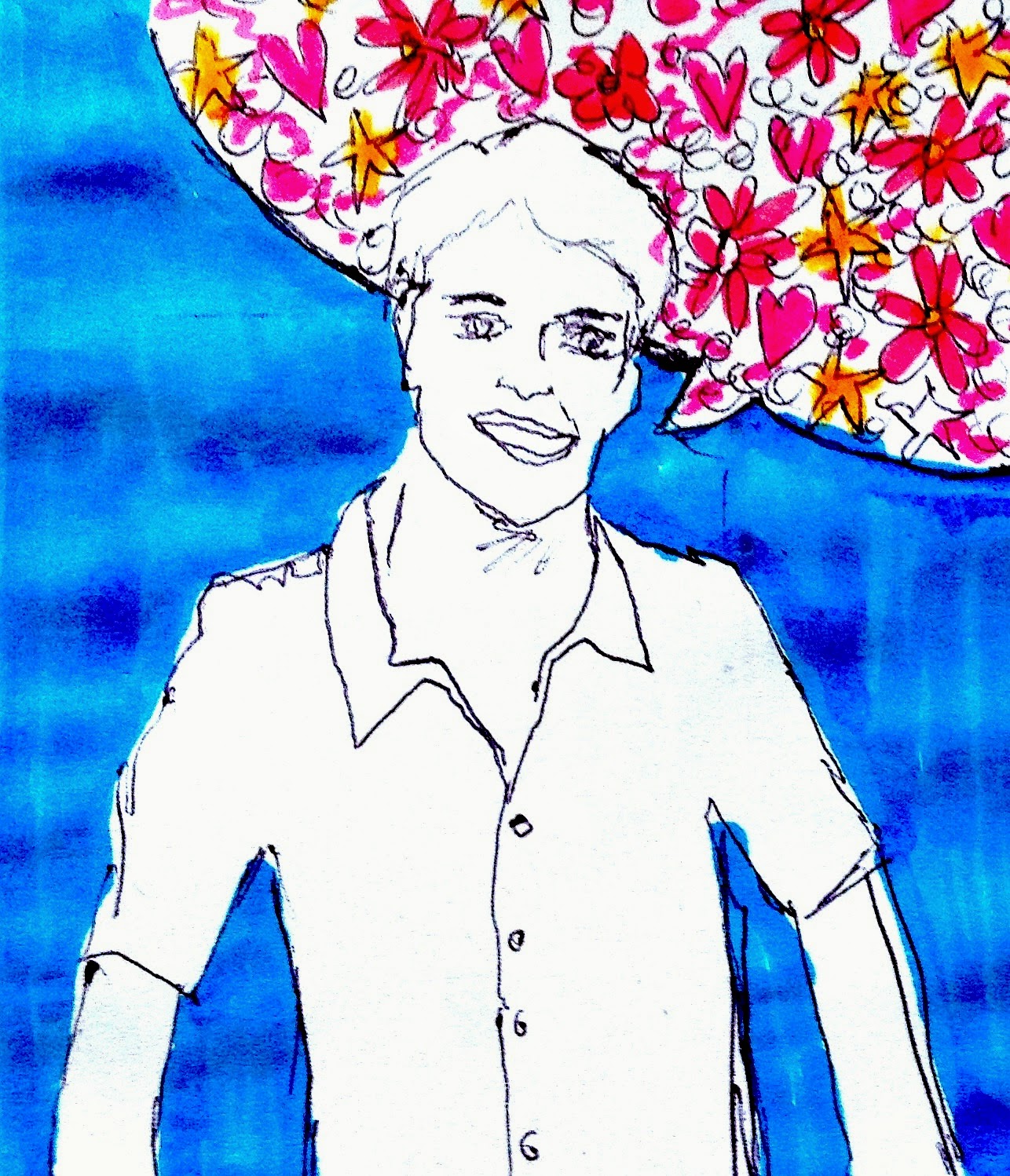
 Standing behind the till at work on a sunny Sunday afternoon, a middle aged man with a friendly looking face walked into the shop with his two children. "Hello" he greeted me, and then, before I could reply, he cleared his throat and said "sorry, that sounded very girly." He then said "hello" again, this time in a deeper voice.
What struck me about this comment was his need to apologise for sounding slightly feminine, and this 'masculine image' he felt he needed to live up to. In our current society it is easy to claim that we have been freed from historic social constraints, and the idea that in this day and age the British public are oppressed would, I'm sure, be met with scathing remarks from many people.
However, I believe that due to the pressure to conform which society exerts upon us, we are not completely liberated. On the contrary our culture is based upon gender stereotypes, so much so that this man I encountered did not want to appear even the slightest bit female. Perhaps this is due to the fact that women are perceived as weaker than men due to generally not being as physically strong.
It saddens me that whilst on a train today I overheard a female university student saying to her friend "but it's harder for girls isn't it, because we're shy." This, I would argue, demonstrates how many girls feel. There exists a subtle feeling of inferiority that creeps into the minds of many girls, and weighs them down from an early age. The harsh gender stereotypes present in our society oppresses us all.
This is not solely an issue which affects women (and members of the LGBT community), it affects men too. The pressure to behave in a 'manly' way leads to many males suppressing their emotions, perhaps a factor in the high incidences of suicide among men, "Suicide remains the most common cause of death in men under the age of 35." (Five Years On, Department Of Health, 2005)
There remains much more to be said on this issue, but for now I shall leave it at this. The pressures we face daily in our lives are so inherent that we barely notice inequality and oppression, to the extent where these views are commonplace and remain unquestioned.
Written by Lili
Picture credit: Ellen
Five Years On, Department Of Health, 2005, http://www.mentalhealth.org.uk/help-information/mental-health-statistics/suicide/